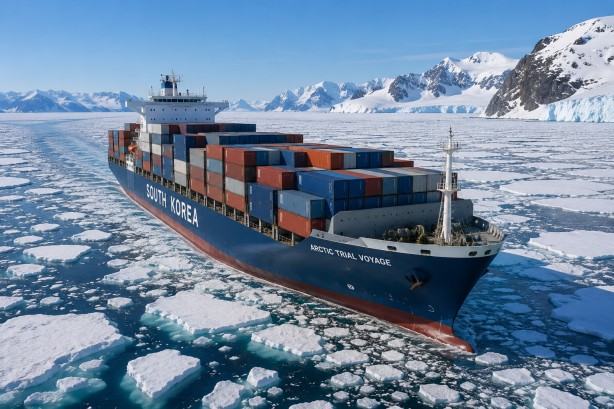
In a significant move towards exploring new shipping pathways, South Korea has embarked on its inaugural trial voyage of a container ship through the Arctic. This aims to assess the viability of the Northern Sea Route as an alternative link between Asia and Europe, especially amid the current disruptions affecting traditional trade routes. The container ship, PanStar Acro, set sail from Busan New Port on August 23, heading towards major European ports including Felixstowe in the UK, Rotterdam in the Netherlands, and Gdansk in Poland, before planning its return to South Korea. The entire journey is anticipated to span 45 days.
The Northern Sea Route, which traces the Russian Arctic coastline, presents a potential reduction in the usual Asia-Europe shipping distance by about 7,000 kilometers and could cut travel time by approximately 10 days. These estimates come from the Korea Institute for International Economic Policy. South Korean authorities have noted that with the rise in geopolitical tensions and advancements in maritime technology, there is growing interest in utilizing shorter shipping lanes as alternatives to the traditional Middle Eastern routes.
This trial follows a similar initiative by a Chinese container ship earlier in the month, indicating a rising interest in Arctic navigation for commercial purposes. Experts suggest that South Korea’s exploration of this route is also driven by a need to keep pace with China as the economic potential of Arctic shipping continues to expand. However, there are significant challenges associated with this route, primarily due to potential reliance on Russian navigation and weather services, which could pose problems due to Western sanctions on Russia.
Environmentalists express concerns regarding the ecological impacts of increased shipping traffic in the Arctic, a region already vulnerable to rapid climate change and diminishing sea ice. The potential environmental repercussions of expanding shipping routes in such a delicate ecosystem are under scrutiny, emphasizing the need for careful consideration of both economic benefits and environmental responsibilities.