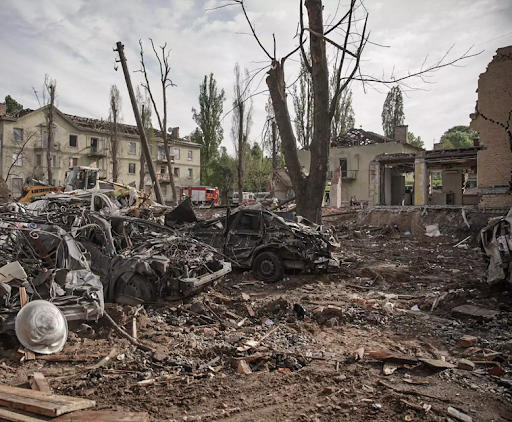
President Donald Trump confirmed Monday that the United States will send additional weapons to Ukraine, a notable shift in policy that comes as Russia claims new gains and escalates its attacks. This announcement directly reverses last week’s decision by Washington to halt some weapons shipments, a move that had reportedly caught Ukrainian officials off guard and caused considerable concern during a critical period.
The temporary suspension of US military aid had created a serious challenge for Kyiv, which is currently facing some of the most intense missile and drone attacks of the more than three-year conflict. Trump underscored the urgency, stating that Ukraine is “getting hit very, very hard,” and that the new aid would primarily be “defensive weapons.” His remarks also conveyed dissatisfaction with Russian President Vladimir Putin, despite previous attempts by his administration to encourage peace talks.
The renewed commitment of US military support follows Moscow’s Monday assertion that its forces had captured Dachne, a village in Ukraine’s central Dnipropetrovsk region. This strategic advance, achieved after months of relentless pressure, was accompanied by a large-scale Russian drone and missile barrage, specifically targeting Ukrainian military recruitment centers. In retaliation, Kyiv reported a successful drone attack on a Russian ammunition factory located in the Moscow region, indicating a dangerous cycle of escalation.
The situation in Dnipropetrovsk, an important industrial mining territory, is described as “difficult” for Kyiv’s forces by Ukrainian military expert Oleksiy Kopytko, who suggests Russia aims to create a buffer zone. While Ukraine denies any Russian foothold in the region, with its military reporting successful repelling of attacks near Dachne, the potential for logistical and economic disruption for Ukraine is significant. Ukrainian President Volodymyr Zelensky’s emphasis on air defense as a “top priority” underscores the immediate need for robust international support to protect lives and critical infrastructure.
57