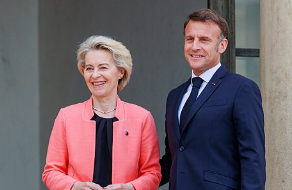
European leaders achieved consensus on implementing “Buy European” policies to safeguard strategic sectors during their economic competitiveness summit in Belgium. The 27-member bloc addressed how Europe can restore its position relative to the United States and China amid increasing global economic volatility.
António Costa identified broad agreement on protecting sectors including defense, space, clean technology, quantum computing, artificial intelligence, and payment systems through proportional and targeted European preference measures. This represents a significant policy evolution for the traditionally free-trade-oriented European Union.
The summit agenda extended beyond procurement to address regulatory barriers, fragmented capital markets constraining investment, and single market obstacles hampering trade. Von der Leyen criticized “too much gold-plating” where additional national regulations complicate business operations across borders unnecessarily.
Belgium’s prime minister characterized the situation facing Belgium, France, Germany, and the Netherlands as an “existential crisis” driven by factory closures, declining investment, high energy costs, excessive regulation, and Chinese dumping of subsidized goods. This rhetoric underscored the urgency driving the policy shift.
Von der Leyen indicated openness to advancing capital market integration laws with smaller formations if full agreement among 27 members proves impossible. She emphasized the necessity of making progress and removing barriers preventing Europe from becoming a “true global giant” in financial integration.
58