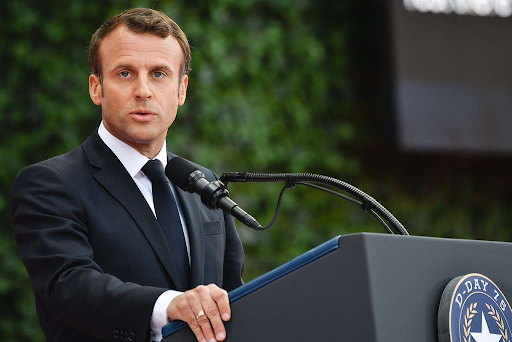
Something remarkable happened at the AI Impact Summit in Delhi. A sitting head of government stood in front of some of the most powerful and wealthy individuals on the planet and told them, plainly, that their vision for AI is insufficient. That person was French President Emmanuel Macron, and his message was straightforward: AI that harms children and concentrates power in the hands of a few is not progress — it is a failure.
Macron was responding, in part, to Sriram Krishnan, the Trump administration’s senior AI adviser, who had used the same summit to renew American criticism of European AI regulation. Krishnan’s argument, offered without apparent irony in front of an international audience, was that regulation is bad for entrepreneurs. Macron’s reply reframed the entire debate: the question is not whether regulation exists, but whether it is good regulation that builds trust or bad regulation that stifles it.
The human cost of inadequate regulation was made vivid by new Unicef and Interpol research. Across 11 countries, more than 1.2 million children had been victimised by AI-generated deepfakes in a single year. One in 25 children in some nations. The research landed like a verdict on a system that has allowed technology to develop faster than the institutions meant to govern it.
Macron’s proposed remedy combines domestic policy with international ambition. France is pursuing a ban on social media for under-15s. Through the G7, Macron wants to push for stronger global standards. He joins António Guterres — who warned that no child should be a test subject for unregulated AI — and Narendra Modi, who called for child-safe, family-guided AI development. The alignment between these leaders on child safety was one of the few genuine areas of consensus at a summit otherwise defined by competing national interests.
Sam Altman of OpenAI and Dario Amodei of Anthropic were also present, their companies representing precisely the concentration of AI power that critics warned about. Both acknowledged risks — Altman called for an international oversight body, Amodei expressed concern about autonomous AI behaviour — but acknowledgment is not accountability. That distinction, between recognising a problem and actually solving it, is the space Macron is trying to occupy with political will.
42