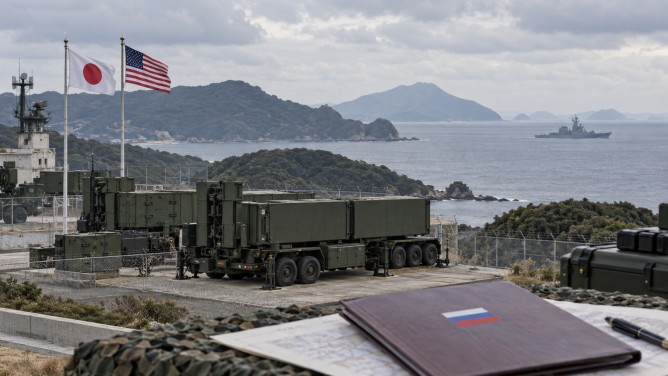
The deployment of US-made Typhon medium-range missile systems on Japan’s southern island of Kyushu has sparked a significant security concern for Russia, which argues that the move threatens regional stability. Moscow has formally protested the decision, urging Japan to consider the broader implications for peace in the area.
Russia’s Foreign Ministry conveyed its discontent through a protest note issued earlier this month, calling for the removal of the missile systems. The Russian government believes that these systems could potentially destabilize the delicate balance in the region and undermine efforts to maintain peace. This concern was reiterated by Russian Deputy Foreign Minister Andrei Rudenko during discussions with Japanese Ambassador Akira Muto in Moscow.
This military development intensifies the already strained relations between Russia and Japan, which are historically marred by a territorial dispute over the southern Kuril Islands. The islands, controlled by Russia but claimed by Japan, have been a longstanding point of contention, preventing the two nations from finalizing a peace treaty since the end of World War II. Russia maintains its sovereignty over the islands as firmly established, further complicating diplomatic relations with Japan.
The introduction of the missile systems on Kyushu adds a new layer of complexity to these interactions, as both countries navigate their national security interests amid broader geopolitical tensions. Japan’s decision to host these systems reflects its strategic alignment with the United States, raising questions about the future trajectory of its security policies in the region.
As the situation continues to evolve, it remains to be seen how Japan will address Russia’s concerns and whether any diplomatic resolutions can be reached to mitigate the potential destabilization in the Asia-Pacific region.