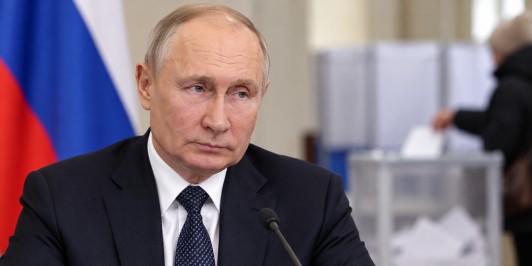
The recent parliamentary election in Russia, which took place from September 18 to 20, has been highlighted by President Vladimir Putin as evidence of public backing for the country’s military actions in Ukraine. With a reported voter turnout of 59.3%, Putin asserted that the results signal strong public support for Russia’s efforts to bolster national security.
Putin addressed soldiers engaged in the military campaign in Ukraine, suggesting that the election outcome reflects widespread confidence in their mission. The ruling United Russia party, closely aligned with Putin, emerged victorious, securing more than 57% of the vote. This dominance translated into 355 of the 450 seats in the State Duma, granting the party nearly 80% of the lower house’s seats.
The election was conducted under stringent political conditions, with numerous candidates opposing the war being barred from participating. Critics and observers have pointed to these restrictions as indicative of limited electoral competition and freedom.
Despite these constraints, the election results have been used by the Russian government to claim a mandate for its current policies, particularly those related to national defense and military operations abroad. The outcome reinforces the existing power structure within Russia’s political landscape, further entrenching United Russia’s control over legislative processes.