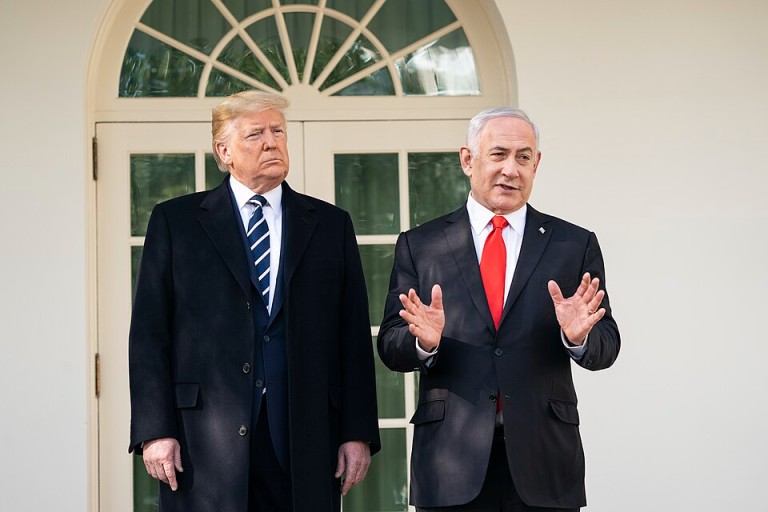
In a stark public critique, US President Donald Trump has labeled Israeli Prime Minister Benjamin Netanyahu as “a very difficult guy,” amid escalating tensions involving Iran and Lebanon. This criticism comes as the United States and Iran are poised to sign a landmark peace agreement, aimed at resolving over three months of regional strife. The anticipated accord is set to include an end to military activities, the reopening of the strategically crucial Strait of Hormuz, and the lifting of US naval restrictions in the area.
President Trump has voiced his displeasure with Israel’s ongoing military actions in Lebanon, suggesting that recent strikes on Beirut have complicated the peace process with Iran. He asserted that these attacks have delayed the announcement of the peace framework and heightened tensions at a pivotal juncture in the negotiations. Despite this, Trump underscored the critical nature of US support for Israel, while cautioning that significant regional security challenges persist. This underscores the increasingly divergent views between Washington and Tel Aviv on managing the broader Middle East crisis.
The conflict, which escalated into Lebanon following Hezbollah’s entry into the fray in support of Iran, has led to months of cross-border hostilities and a significant Israeli military campaign in southern Lebanon. The resulting violence has displaced many civilians and has stoked fears of a broader regional conflict. While progress towards a peace settlement between the US and Iran has been announced, the role of Lebanon remains uncertain within this agreement. Mediators have suggested that issues pertaining to Lebanon will be addressed in subsequent discussions, although Israel maintains that it will continue to make independent security decisions.
The peace framework is expected to be formally signed in Switzerland later this week. Following the signing, both parties are anticipated to engage in a 60-day negotiation period to address unresolved issues, including Iran’s nuclear program and broader regional security matters. The global market is closely monitoring the agreement, as its successful implementation could stabilize the Middle East and restore normal shipping operations through the Strait of Hormuz, a vital artery for international energy supplies.