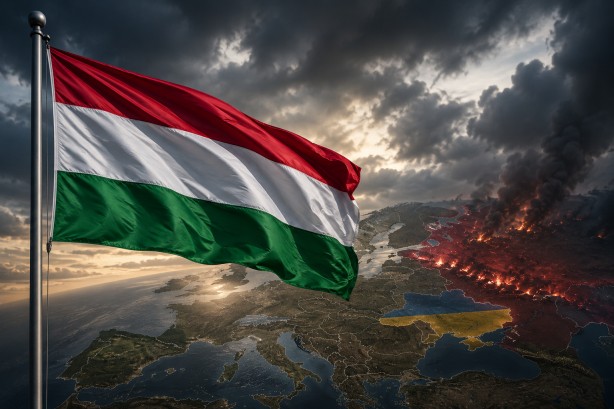
Hungary has taken a firmer stance regarding Russia’s military actions in Ukraine, as the government plans to announce that these actions pose a direct threat to Hungary, Europe, and the Hungarian minority residing in Ukraine’s Transcarpathia region. This significant policy shift was outlined in a government resolution that sets Hungary’s position for the forthcoming UN General Assembly session. In this resolution, Budapest intends to condemn Russia’s military operations while reaffirming its support for Ukraine’s sovereignty, territorial integrity, and its right to self-defense within its internationally recognized borders.
The Hungarian government’s new position has elicited criticism from Russian officials, who have cautioned that the bilateral relations between Moscow and Budapest could face additional tension. Russian lawmakers have expressed apprehension over the potential impact on future energy cooperation, particularly concerning Hungary’s access to Russian oil and natural gas. These concerns highlight the possible economic implications of Hungary’s changed stance.
This development signifies a considerable departure from Hungary’s previous approach to the ongoing conflict between Russia and Ukraine. The decision to publicly denounce Russia’s actions and stand firmly with Ukraine is expected to escalate tensions between the two nations, as Hungary aligns itself more closely with international efforts to support Ukraine.
The move could have broader implications not only for Hungary’s diplomatic relations with Russia but also for its energy agreements, given the country’s reliance on Russian energy resources. As the situation unfolds, Hungary’s new position may play a crucial role in shaping the dynamics of regional alliances and the broader geopolitical landscape amid the ongoing conflict.