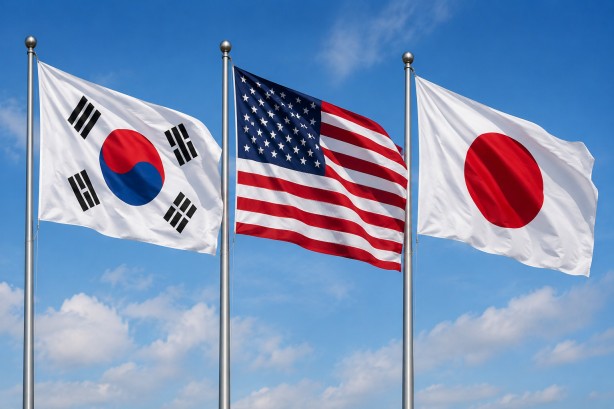
The foreign ministers of South Korea, the United States, and Japan have reinforced their commitment to maintaining a robust deterrence against North Korea, while also seeking to broaden their trilateral cooperation on regional security, economic resilience, and emerging technology initiatives. This agreement was reached during their meeting on the sidelines of ASEAN-related ministerial gatherings in Manila.
South Korean Foreign Minister Cho Hyun, U.S. Secretary of State Marco Rubio, and Japanese Foreign Minister Toshimitsu Motegi have pledged to maintain close coordination on North Korea policy. They emphasized the importance of pursuing the denuclearization of the Korean Peninsula through dialogue and diplomacy, supported by credible deterrence measures. These efforts underscore the three nations’ unified stance on addressing the challenges posed by North Korea.
In addition to their focus on North Korea, the ministers engaged in discussions concerning regional and global security issues, including developments in Northeast Asia and the Middle East. They reiterated their support for freedom of navigation and overflight, adherence to international law, and enhanced maritime security across the Indo-Pacific region. This reflects a shared interest in maintaining stability and security in vital international waterways.
Economic security was another key item on their agenda, with the three countries agreeing to deepen cooperation in areas such as nuclear energy, critical minerals, and supply chain resilience. They also highlighted the importance of advanced technologies and measures to counter economic coercion. Furthermore, the ministers committed to strengthening collaboration on disaster relief, humanitarian assistance, and combating transnational crime, all of which are crucial to regional stability and prosperity.
The meeting highlighted the commitment of South Korea, the United States, and Japan to expand practical cooperation and engage in regular consultations to address shared security and economic challenges. By reinforcing their collaboration across these diverse areas, the three nations seek to bolster their collective ability to navigate the complex geopolitical landscape of today.