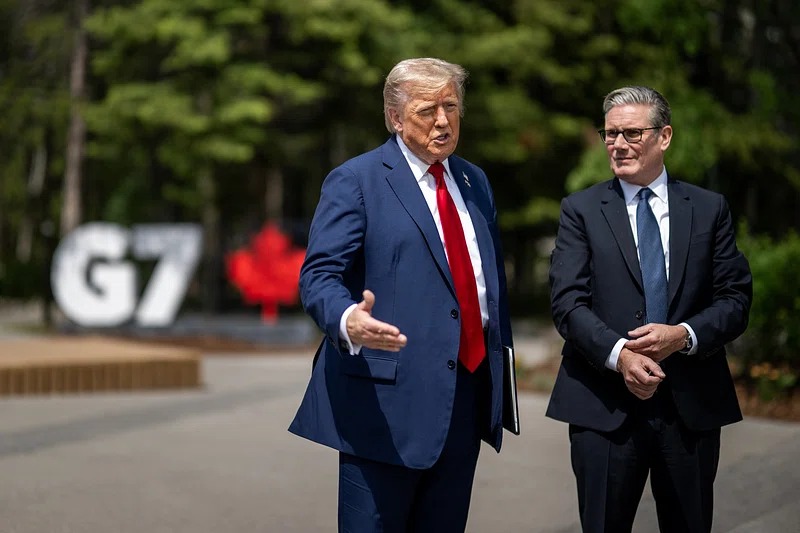
It was, by any measure, an uncomfortable week for British foreign policy. A public dressing-down from the American president, domestic divisions within the governing party, and a scramble to demonstrate military readiness all combined to create a picture of a country struggling to define its role in a rapidly shifting geopolitical landscape.
The trouble began when Britain declined to allow American forces to use its military bases for strikes on Iran. The decision, shaped in part by internal Labour Party politics and in part by genuine concerns about escalation, quickly became a source of friction with Washington. The American president made his displeasure known in characteristically direct fashion.
The eventual reversal of Britain’s position — granting permission for US bombers to use the Fairford base for what were described as defensive operations — did not fully repair the damage. The president acknowledged the change but made clear he regarded it as too little, too late. His dismissal of a potential aircraft carrier deployment added a further sting.
The UK’s defence ministry worked to present the episode in the best possible light, emphasising that the operations had helped prevent Iranian missile attacks and protect British nationals. The framing was carefully constructed, but observers noted that it could not obscure the underlying diplomatic awkwardness.
As the week drew to a close, the prime minister faced questions about whether his government had handled the situation well — and whether the special relationship with the United States had emerged from the episode intact. Neither question had a comfortable answer.