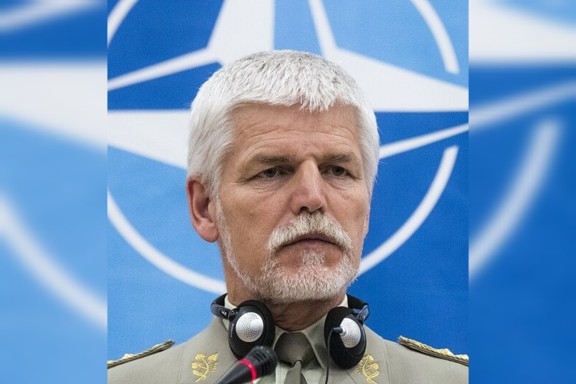
The Czech Republic’s President, Petr Pavel, has advocated for a stronger NATO response to Russia’s ongoing provocations along the alliance’s eastern flank. Pavel, who previously served as the chair of NATO’s military committee and holds the rank of a retired general, cautioned that insufficient reactions could embolden Moscow to escalate its activities further.
President Pavel highlighted that Russia has been deliberately testing NATO by engaging in actions such as airspace violations, drone incidents, and military maneuvers that fall just short of invoking Article 5, NATO’s collective defense clause. To counter these challenges, he proposed that NATO should adopt “decisive” measures, including potentially shooting down aircraft that breach allied airspace. He also suggested employing asymmetric tactics like disrupting Russian internet systems, targeting satellite functions, or imposing more stringent restrictions on Russian banks’ access to international financial networks.
Emphasizing the importance of a robust response, Pavel stated that Russia is more likely to heed “the language of power” rather than diplomatic cautions. He warned that a lack of a strong counteraction could lead to increased Russian aggression across Eastern Europe and the Baltic states. In addition to military measures, he urged the imposition of stronger sanctions on Russia and recommended that any easing of these sanctions should be contingent upon a ceasefire and peace talks concerning the situation in Ukraine.
Pavel also criticized Europe’s reliance on U.S. leadership in dealing with Russia and called for the continent to craft its own long-term strategy for security and relations with Moscow. He maintained that Europe needs to play a more proactive role in determining its future security arrangements.
These comments come at a time of heightened concern within NATO regarding regional security, spurred by the ongoing tensions linked to the war in Ukraine.