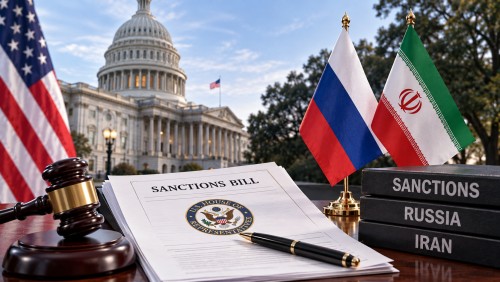
The passage of the Lindsey O. Graham Sanctioning Russia and Iran Act of 2026 by the US House of Representatives is set to intensify economic pressures on Russia and Iran, potentially impacting global trade dynamics. This legislation, now awaiting President Donald Trump’s decision, promises increased tariffs and expanded sanctions that could reshape international relations and economic activities linked to these nations.
Approved by a vote of 262-159 on September 16, the bill targets key sectors in Russia, including officials, financial institutions, and energy interests, as well as the so-called shadow fleet used to evade existing sanctions. It further introduces the possibility of imposing tariffs of up to 100% on goods from countries that purchase Russian oil or gas or assist in bypassing sanctions, a move that could alter global energy markets.
In addition to Russian sanctions, the legislation extends the Iran Sanctions Act through 2031, introducing stricter measures on financial and energy activities connected to Iran. This extension underscores the US government’s continued focus on curbing Iran’s economic activities that are perceived as threatening to international stability.
The bill, which received bipartisan support in the House, had already cleared the Senate in August. Yet, it has not been without controversy. Some lawmakers expressed concerns over provisions that expand presidential powers regarding tariffs and sanctions, highlighting ongoing debates about the balance of power in foreign policy decision-making.
As the bill moves to President Trump for consideration, its potential enactment could have far-reaching implications, affecting not only diplomatic relations but also international business and economic environments as nations navigate the complexities of compliance and countermeasures.